
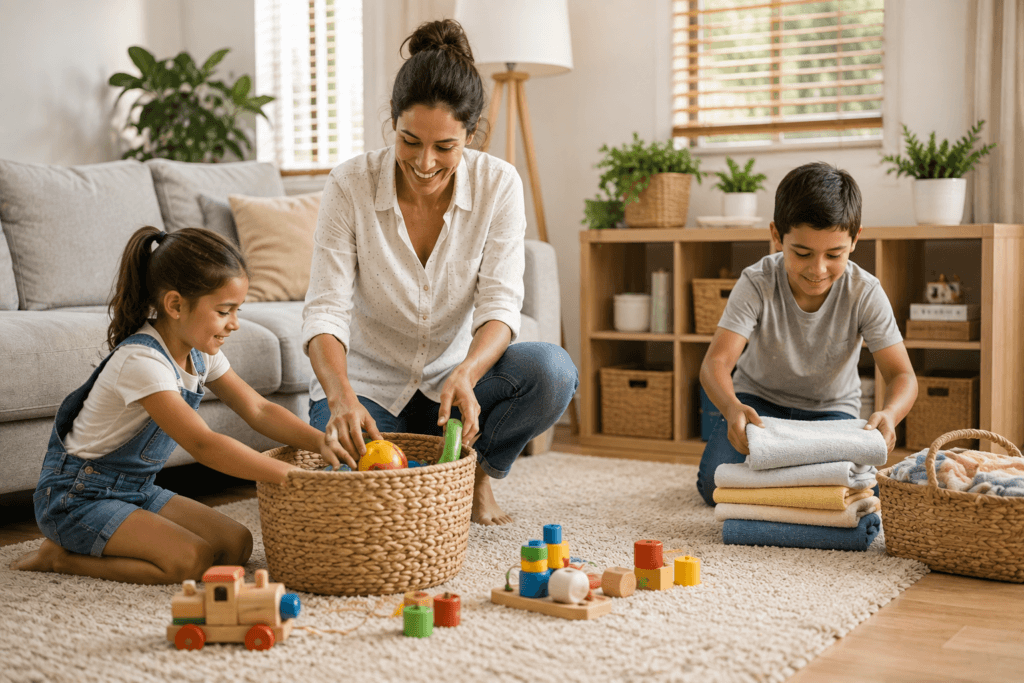
Getting kids to help around the house can sometimes feel like creating more work instead of less. You ask for toys to be picked up, only to repeat yourself five times. Laundry ends up folded in creative shapes, and setting the table somehow becomes a twenty-minute project. Still, age-appropriate chores can be an important part of helping children become more independent and confident.
Household responsibilities are not simply about keeping the home clean. They give children opportunities to practice everyday skills, contribute to family life, and experience the satisfaction of completing something on their own. The CDC’s positive parenting guidance describes parenting as a process that gradually prepares children for independence. Giving kids manageable responsibilities at home can be one practical part of that process.
The key is choosing chores that fit your child’s age and abilities. Expecting too much can create frustration, while doing everything for children can prevent them from practicing skills they are ready to learn. A balanced approach focuses on teaching rather than perfection.
Chores Are Really Life-Skill Practice
 It can help to stop thinking about chores as jobs adults want children to do and start thinking about them as life-skill practice. Putting dirty clothes in a hamper teaches organization. Clearing a plate teaches responsibility. Helping prepare dinner introduces basic kitchen skills. Packing a backpack builds independence.
The Child Mind Institute notes that household chores can help children learn responsibility, teamwork, and practical skills they will eventually need to manage on their own.
That does not mean every chore needs to become a serious lesson. Everyday repetition is often enough. Children learn through participating, watching, trying, making mistakes, and trying again.
What Chores Can Kids Do at Different Ages?
Every child develops differently, so age ranges should be treated as general guides rather than strict rules. Some children may be ready for a task earlier, while others may need more guidance. Safety should always come first.
Ages 2 to 3: Small Helping Tasks
Toddlers usually love copying what adults do. Their enthusiasm can make this a great time to introduce very simple household responsibilities.
- Put toys into a basket.
- Place dirty clothes in the hamper.
- Carry lightweight items to another room.
- Put books back on a low shelf.
- Help wipe small spills with assistance.
At this age, the goal is participation rather than getting the task done perfectly. You may still need to finish the job afterward, but your child is learning that everyone helps take care of the home.
Ages 4 to 5: Building Simple Independence
Preschoolers can often manage short tasks with clear instructions. In fact, the CDC’s developmental guidance for four-year-olds encourages allowing children to help with simple chores as a way of building independence.
- Feed a pet with supervision.
- Help set the table with safe items.
- Put shoes and backpacks away.
- Match socks.
- Water easy-to-reach plants.
- Help make the bed.
Give one direction at a time when needed. Instead of saying, “Clean your room,” try, “Please put your stuffed animals in the basket.” Specific requests are easier for young children to understand and complete.
Ages 6 to 8: Taking Ownership of Regular Tasks
Elementary-age children can usually begin handling recurring responsibilities with fewer reminders.
- Make their bed.
- Clear dishes after meals.
- Help load safe dishes into the dishwasher.
- Fold simple clothing items.
- Sweep small areas.
- Pack parts of their school bag.
- Help prepare simple snacks.
This is also a useful age to connect chores with the idea of teamwork. Explain that family members contribute because everyone shares the home. Kids begin to understand that helping is not simply something they are ordered to do; it makes life easier for the whole household.
Ages 9 to 12: Practicing Real Household Skills
Older elementary and preteen children can often take on tasks that require multiple steps.
- Do basic laundry with instruction.
- Vacuum a room.
- Prepare simple meals or breakfasts.
- Take out household trash.
- Change bed linens.
- Organize school supplies.
- Help put groceries away.
At this stage, chores become excellent preparation for future independence. Children can begin understanding not only how a task is completed, but why it matters.
Teens: Preparing for Independent Life
Teenagers can gradually learn most basic household skills they will eventually need when living independently.
- Wash and dry their own laundry.
- Cook basic family meals.
- Clean a bathroom.
- Vacuum and mop floors.
- Help shop for groceries.
- Organize personal schedules and belongings.
- Handle more involved pet-care responsibilities.
The goal is not to turn teens into household employees. It is to make sure they leave home knowing how to care for themselves and contribute when sharing space with other people.
Make Chores Part of the Family Routine
Chores become much easier when they are predictable. Instead of randomly announcing that something needs to be cleaned, connect responsibilities to routines that already exist.
For example, backpacks can be put away immediately after coming home. Plates can go to the sink after dinner. Toys can be picked up before bedtime. Laundry can happen on a regular day each week.
Consistent routines help children know what comes next. The CDC’s guidance on routines and rules explains how predictable structure can help children understand expectations.
Parents who are trying to create more structure at home may also find useful ideas in Time Management Hacks Every Mom Should Know. Connecting chores with activities that already happen every day can be much easier than saving everything for one overwhelming cleaning session.
Give Clear Instructions Instead of Broad Commands
“Clean your room” can mean something completely different to a six-year-old than it does to an adult. Large instructions can feel overwhelming because children may not know where to begin.
Instead, break the task into smaller steps:
- Put the books on the shelf.
- Place dirty clothes in the hamper.
- Put toys into their baskets.
- Bring cups or dishes to the kitchen.
Once these steps become familiar, your child may eventually be able to handle the larger instruction independently. Breaking tasks into manageable pieces can also reduce the number of reminders parents need to give.
Teach the Chore Before Expecting Independence
Children cannot automatically know how you want a task completed. Before making a chore their responsibility, show them how to do it.
You can follow a simple pattern: demonstrate the task, complete it together, supervise while your child tries it, and eventually allow the child to do it independently.
For example, when teaching your child to fold towels, first show each step slowly. The next time, fold them together. After a few attempts, let your child try while you stay nearby. Eventually, the task can become something they handle without help.
It may take longer initially, but teaching reduces repeated frustration later. Think of chores as skills that need practice rather than tests children either pass or fail.
Do Not Expect Adult-Level Results
A child’s folded towels may not look like yours. The bedspread may be crooked. A few crumbs may survive sweeping. That does not mean the chore failed.
If you immediately redo every task in front of your child, they may begin believing their effort is never good enough. Instead, focus first on participation and progress.
You can gradually increase expectations as skills improve. A preschooler might simply pull up a blanket when “making the bed,” while a ten-year-old can learn to straighten sheets and pillows.
Perfection should not be the goal. What matters is that children have opportunities to practice and become more capable over time.
Give Kids Some Choice When Possible
Children often cooperate better when they have some ownership. Instead of assigning every task, offer two reasonable choices.
You might ask, “Would you rather clear the table or help load the dishwasher?” Both options accomplish something useful while allowing your child to participate in the decision.
Choice can be especially helpful for children who strongly resist being told what to do. The boundaries remain clear, but they gain some control over how they contribute.
Use Chore Charts Without Making Life Complicated
A visual chore chart can be useful, particularly for younger children who need reminders. Keep it simple. Too many boxes, points, stickers, and complicated reward systems can become another job for parents to manage.
A basic weekly chart with a child’s name and two or three responsibilities may be enough. Place it somewhere visible, such as the refrigerator or family command center.
You can also connect the chart to the same shared schedule you use for school events, appointments, activities, and household responsibilities. Keeping everything in one familiar location can make routines easier for both children and parents.
Should Kids Get Paid for Chores?
Families approach allowance differently, and there is no single system that fits everyone. Some parents provide allowance for completing certain responsibilities. Others separate basic family chores from opportunities to earn money through extra jobs.
One approach is to make ordinary responsibilities, such as putting clothes away or clearing dishes, part of family participation. Optional larger tasks, such as washing a car or organizing a garage shelf, can become opportunities to earn money.
Whatever system you choose, keep expectations understandable and consistent. Children should know what responsibilities are expected and which tasks, if any, come with payment.
Connect Chores With Family Time
Not every household job needs to be completed alone. Some chores can become family activities. Put on music and clean together. Fold laundry while talking. Have children help wash vegetables while you prepare dinner.
Your kitchen is an especially useful place for teaching responsibility. Balancing Mommy’s guide to meal prepping for the whole family offers more ideas for making food preparation part of everyday family life.
When chores become something the household does together instead of a punishment, children may develop a healthier attitude toward contributing. They also get valuable opportunities to talk, cooperate, and learn practical skills from adults.
Avoid Turning Every Chore Into a Battle
 Some resistance is normal. Few children will cheer every time they hear, “Please put away your laundry.” The goal is not to eliminate every complaint but to avoid allowing each task to turn into a long argument.
Keep expectations calm and consistent. Try not to give ten reminders followed by frustration. Clearly explain what needs to happen, provide reasonable support when necessary, and follow through consistently.
This same calm approach can support other areas of parenting as well. If hectic days make it difficult to stay present, Mindful Parenting: 5 Ways to Stay Present When Life Gets Hectic offers additional strategies for slowing down during demanding family moments.
Parents also need to protect their own energy. If household responsibilities are becoming overwhelming, Balancing Mommy’s self-care resources for moms offer more ideas for creating breathing room during a busy week.
Let Kids Experience the Pride of Doing It Themselves
Sometimes the hardest part for parents is stepping aside. It can be much faster to tie the shoes, pack the bag, make the bed, or clean the table yourself.
But independence requires opportunities to practice. When children complete something without help, even imperfectly, they experience genuine accomplishment.
Praise can focus on effort and responsibility. You might say, “You remembered to feed the dog without me asking,” or, “You kept trying even though folding that shirt was tricky.”
This kind of specific encouragement shows children exactly what they did well. Over time, those small successes can help them feel more capable and confident about handling responsibilities independently.
Adjust Responsibilities as Your Child Grows
A chore system should evolve. Tasks that challenge a five-year-old may feel effortless by age eight. Review responsibilities every few months and gradually introduce new skills.
This does not necessarily mean giving children more and more work. Sometimes it simply means replacing an easy task with one that better fits their growing abilities.
Your parenting approach will evolve too. Balancing Mommy’s broader parenting resources can help you connect household responsibility with other parts of family life, including routines, communication, mindfulness, and independence.
Keep the Bigger Goal in Mind
The dishes, laundry, and toys matter, but they are not really the biggest reason to involve kids in chores. The larger goal is raising children who understand how to care for themselves, their belongings, and the spaces they share with others.
Age-appropriate chores give children repeated opportunities to practice responsibility in a safe environment. They learn that families work together, everyday tasks require effort, and they are capable of contributing.
You do not need a perfect chore chart or children who happily cooperate every day. Start with one or two responsibilities your child can realistically manage. Teach the task, keep expectations clear, and allow plenty of room for practice.
Over time, those small jobs can become valuable habits and practical skills your children carry with them long after the toy baskets and chore charts are gone.