

The hours after school can feel like one of the busiest parts of the day. Kids come home tired, hungry, emotional, and full of stories. At the same time, moms may be juggling dinner, work tasks, chores, homework, and evening plans. A calm after-school routine can help make this transition smoother for everyone.
An after-school routine does not need to be strict or complicated. It simply gives kids a clear rhythm after a long school day. When children know what to expect, they often feel more settled. Parents also feel less overwhelmed because the afternoon has structure instead of chaos.
If your mornings already feel busy, you may also find helpful ideas in this guide on morning routines for moms. A smoother morning and a calmer afternoon can work together to create a more balanced family day.
Why After-School Hours Can Feel So Chaotic
After school, kids often need time to decompress. They have spent hours listening, learning, following rules, and managing emotions. When they finally get home, they may release all that built-up energy. This can look like whining, arguing, silence, hunger, or sudden bursts of excitement.
For moms, this can be hard to manage. You may want your child to start homework right away, but your child may need a break first. You may be thinking about dinner, while your child wants attention. This mismatch can create stress.
A calm routine helps bridge that gap. It gives your child time to transition from school mode to home mode. It also helps you avoid repeating the same reminders every afternoon.
Start With a Simple Welcome Home Moment
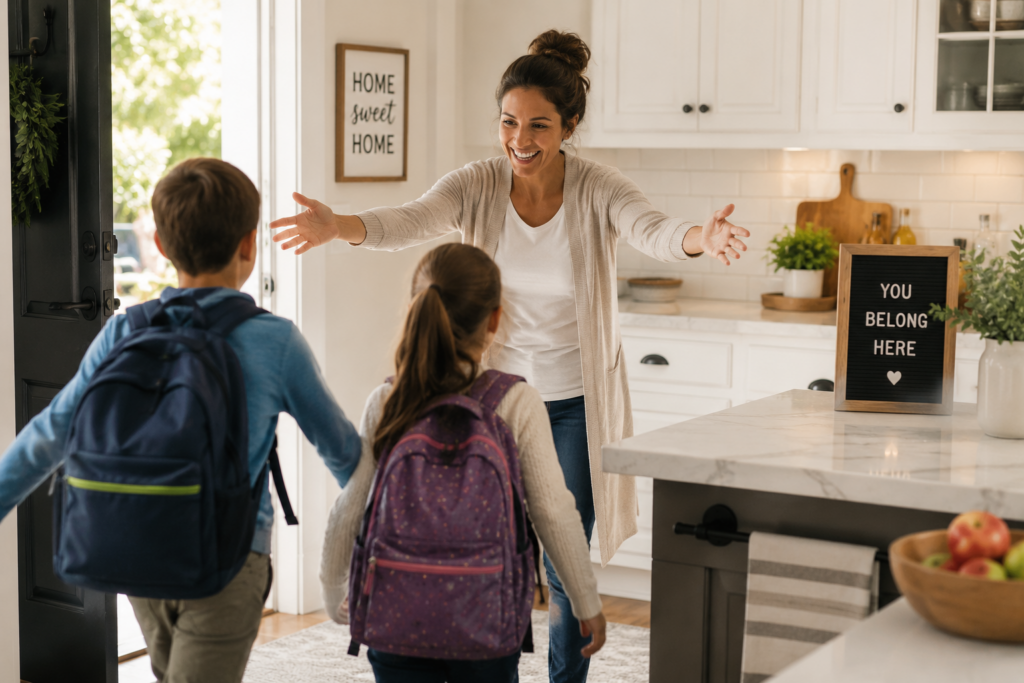
The first few minutes after school matter. Instead of jumping straight into questions, chores, or homework, try creating a short welcome home moment. This could be a hug, a quick snack, or a few minutes of quiet conversation.
Some kids want to talk right away. Others need silence first. Pay attention to your child’s personality. A calm welcome home routine lets your child feel safe and seen before moving into the next part of the day.
You might say, “I’m happy you’re home. Let’s have a snack first, then we can talk about your day.” This keeps the tone warm without overwhelming your child with questions.
Create a Snack and Reset Routine
Most kids come home hungry. A simple snack routine can prevent meltdowns and help them refocus. Choose snacks that are easy, filling, and balanced. Fruit, yogurt, cheese, crackers, sandwiches, smoothies, or boiled eggs can work well.
After snack time, give kids a short reset period. This might be 15 to 30 minutes of quiet play, reading, drawing, outdoor time, or relaxing. The goal is to help them release school-day stress before starting homework or chores.
For helpful guidance on building healthier family habits, you can explore resources from the CDC School Health.
Make Backpack Unpacking Part of the Routine
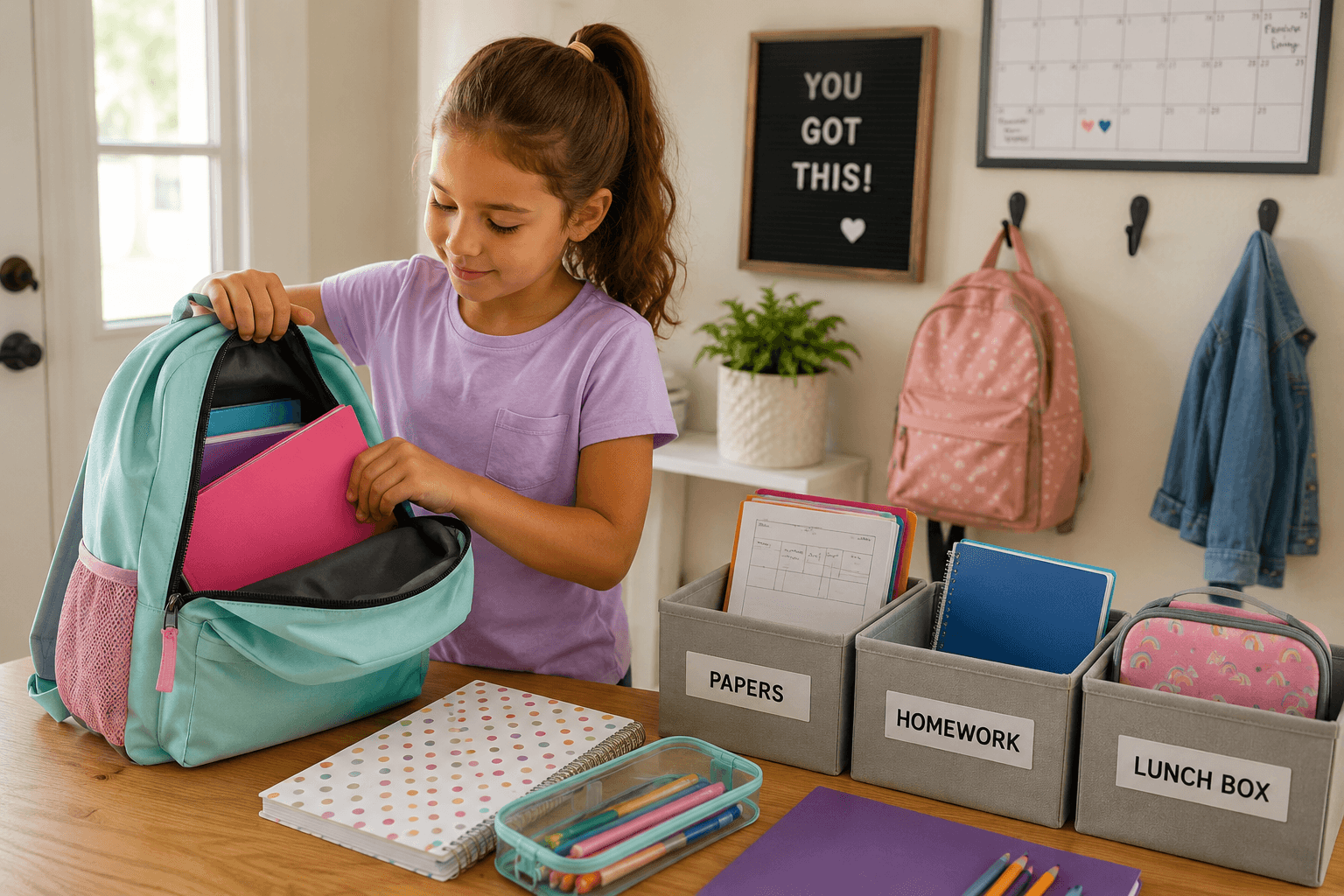
Backpacks can quickly become messy. Papers get lost, lunch boxes stay forgotten, and homework slips disappear. Adding backpack unpacking to the after-school routine can save stress later.
Create a simple system near the entryway or kitchen. Have one spot for lunch boxes, one for school papers, and one for homework folders. Younger kids may need reminders at first, but over time, this can become automatic.
This small habit helps kids become more responsible. It also helps parents stay aware of school forms, assignments, and upcoming events.
Create a Homework and Activity Schedule
Homework time can be one of the biggest sources of after-school stress. Some kids work best right after snack. Others need a longer break before they can focus. The best schedule depends on your child’s age, energy level, and school workload.
Try choosing a consistent homework window. For example, homework may happen from 4:30 to 5:15 each day. Keeping it predictable helps reduce arguments because your child knows when it is coming.
Create a quiet homework space with pencils, paper, chargers, and other supplies nearby. This prevents delays and keeps your child focused. If your child struggles with attention or learning differences, Understood.org offers parent-friendly resources that may help.
Keep Homework Support Calm
Parents do not need to hover during homework. Instead, stay nearby and available. Encourage your child to try first, then ask for help when needed. Praise effort, not just correct answers.
If homework becomes emotional, take a short break. A five-minute pause can prevent frustration from turning into a bigger conflict.
Add Screen-Time Boundaries
Screens can be tempting after school, especially when everyone is tired. A little screen time may be fine for some families, but it helps to set clear limits. Without boundaries, screens can delay homework, chores, dinner, and bedtime.
You might allow screens only after homework and chores are done. Another option is to keep weekdays mostly screen-light and save longer screen time for weekends.
The American Academy of Pediatrics encourages families to create media plans that fit their household needs. A family media plan can help kids understand when screens are allowed and when they need to be put away.
Include Chores Without Overloading Kids
After-school chores should be simple and age-appropriate. The goal is not to add pressure, but to teach responsibility and teamwork. Small tasks can help kids contribute to the household without feeling overwhelmed.
Examples include putting shoes away, emptying lunch boxes, feeding pets, setting the table, or placing dirty clothes in the hamper. Keep the list short and consistent.
If your family already uses routines, this article on time management hacks every mom should know can help you find more ways to organize daily responsibilities.
Protect Time for Connection
An after-school routine should not only focus on tasks. Kids also need connection after being away from home all day. Even ten focused minutes can make a difference.
You can talk during snack, take a short walk, read together, or let your child help with dinner. The activity matters less than your attention. When kids feel connected, they may be more cooperative during the rest of the evening.
If you want to be more present during busy days, this post on mindful parenting when life gets hectic can give you more simple ideas.
Plan Dinner Before the Evening Rush
Dinner can become stressful when no one knows what to cook. A simple meal plan can make evenings easier. You do not need fancy meals. The goal is to have a basic plan before everyone gets hungry.
Try keeping a list of easy weekday dinners. Pasta, rice bowls, tacos, soups, sandwiches, and sheet pan meals can be helpful options. Prep ingredients earlier in the week when possible.
You can also let kids help with small dinner tasks. They can wash vegetables, set the table, or stir ingredients with supervision. This gives them responsibility and creates another chance for connection.

Build in Quiet Time Before Bed
A calm after-school routine should lead into a smoother evening. After homework, dinner, and chores, create a quiet wind-down period. This helps kids transition toward bedtime.
Quiet time might include reading, bath time, soft music, drawing, or preparing clothes for the next day. Try to keep this part of the evening predictable. Kids often sleep better when bedtime feels calm and familiar.
For more information on children’s emotional health and routines, the Child Mind Institute offers helpful parenting resources.
Do Not Forget Your Own Reset Time
Moms need an after-school reset too. The afternoon rush can be draining, especially if you are managing everyone’s emotions and needs. Try adding a small self-care moment into your routine.
This could be drinking water, taking a few deep breaths, stepping outside for two minutes, or sitting quietly before starting dinner. Small pauses can help you respond with more patience.
If you often feel stretched thin, this guide on creating a self-care routine that fits a mom’s schedule can help you build realistic habits. You can also read mom burnout is real for more ways to recharge without guilt.
Adjust the Routine When Needed
No routine works perfectly every day. Some afternoons may include sports, appointments, late pickups, or tired kids. That is normal. A routine should support your family, not make you feel trapped.
Review your after-school rhythm every few weeks. Ask what is working and what feels stressful. Maybe homework needs to happen later. Maybe snack time needs to be longer. Maybe chores need to be simpler.
Small adjustments can keep the routine realistic. The best routine is one your family can actually follow.
Conclusion: Create a Calmer Afternoon One Step at a Time
A calm after-school routine can help reduce family stress and make weekdays feel more manageable. Start with a warm welcome home moment, offer a snack, create a backpack system, set a homework window, and leave room for connection.
You do not need to change everything at once. Choose one or two habits to begin with, then build from there. Over time, these small routines can help your child feel more secure and help you feel more prepared.
The goal is not a perfect afternoon. The goal is a calmer, more connected rhythm that works for your real family life.